Senin, 19 Januari 2015

BASIC PERSUASION TECHNIQUES


1. Association. This persuasion technique tries to link a product, service, or idea with something already liked or desired by the target audience, such as fun, pleasure, beauty, security, intimacy, success, wealth, etc. The media message doesn’t make explicit claims that you’ll get these things; the association is implied. Association can be a very powerful technique. A good ad can create a strong emotional response and then associate that feeling with a brand (family = Coke, victory = Nike). This process is known as emotional transfer. Several of the persuasion techniques below, like Beautiful people, Warm & fuzzy, Symbols and Nostalgia, are specific types of association.


 2. Bandwagon. Many ads show lots of people using the product, implying that "everyone is doing it" (or at least, "all the cool people are doing it"). No one likes to be left out or left behind, and these ads urge us to "jump on the bandwagon.” Politicians use the same technique when they say, "The American people want..." How do they know?

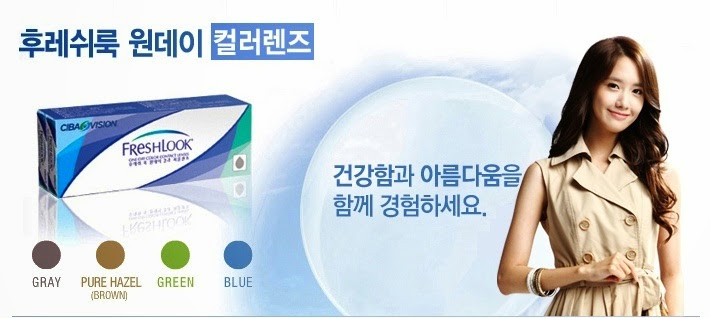
3. Beautiful people. Beautiful people uses good-looking models (who may also be celebrities) to attract our attention. This technique is extremely common in ads, which may also imply (but never promise!) that we’ll look like the models if we use the product.
4. Bribery. This technique tries to persuade us to buy a product by promising to give us something else, like a discount, a rebate, a coupon, or a "free gift.” Sales, special offers, contests, and sweepstakes are all forms of bribery. Unfortunately, we don’t really get something for free -- part of the sales price covers the cost of the bribe.
5. Celebrities. (A type of Testimonial – the opposite of Plain folks.) We tend to pay attention to famous people. That’s why they’re famous! Ads often use celebrities to grab our attention. By appearing in an ad, celebrities implicitly endorse a product; sometimes the endorsement is explicit. Many people know that companies pay celebrities a lot of money to appear in their ads (Nike’s huge contracts with leading athletes, for example, are well known) but this type of testimonial still seems to be effective.
6. Experts. (A type of Testimonial.) We rely on experts to advise us about things that we don’t know ourselves. Scientists, doctors, professors and other professionals often appear in ads and advocacy messages, lending their credibility to the product, service, or idea being sold. Sometimes, “plain folks” can also be experts, as when a mother endorses a brand of baby powder or a construction worker endorses a treatment for sore muscles.
7. Explicit claims. Something is "explicit" if it is directly, fully, and/or clearly expressed ordemonstrated. For example, some ads state the price of a product, the main ingredients, where it was made, or the number of items in the package – these are explicit claims. So are specific, measurable promises about quality, effectiveness, or reliability, like “Works in only five minutes!” Explicit claims can be proven true or false through close examination or testing, and if they’re false, the advertiser can get in trouble. It can be surprising to learn how few ads make explicit claims. Most of them try to persuade us in ways that cannot be proved or disproved
8. Fear. This is the opposite of the Association technique. It uses something disliked or feared by the intended audience (like bad breath, failure, high taxes or terrorism) to promote a "solution.” Ads use fear to sell us products that claim to prevent or fix the problem. Politicians and advocacy groups stoke our fears to get elected or to gain support.
9. Humor. Many ads use humor because it grabs our attention and it’s a powerful persuasion technique. When we laugh, we feel good. Advertisers make us laugh and then show us their product or logo because they’re trying to connect that good feeling to their product. They hope that when we see their product in a store, we’ll subtly re-experience that good feeling and select their product. Advocacy messages (and news) rarely use humor because it can undermine their credibility; an exception is political satire.
10. Intensity. The language of ads is full of intensifiers, including superlatives (greatest, best, most, fastest, lowest prices), comparatives (more, better than, improved, increased, fewer calories), hyperbole (amazing, incredible, forever), exaggeration, and many other ways to hype the product.

11. Maybe. Unproven, exaggerated or outrageous claims are commonly preceded by "weasel words" such as may, might, can, could, some, many, often, virtually, as many as, or up to. Watch for these words if an offer seems too good to be true. Commonly, the Intensity and Maybe techniques are used together, making the whole thing meaningless.
12. Plain folks. (A type of Testimonial – the opposite of Celebrities.) This technique worksbecause we may believe a "regular person" more than an intellectual or a highly-paid celebrity. It’s often used to sell everyday products like laundry detergent because we can more easily see ourselves using the product, too. The Plain folks technique strengthens the down-home, "authentic" image of products like pickup trucks and politicians. Unfortunately, most of the "plain folks" in ads are actually paid actors carefully selected because they look like "regular people.”
13. Repetition. Advertisers use repetition in two ways: Within an ad or advocacy message, words, sounds or images may be repeated to reinforce the main point. And the message itself (a TV commercial, a billboard, a website banner ad) may be displayed many times. Even unpleasant ads and political slogans work if they are repeated enough to pound their message into our minds.
"Prudential : always listening always understanding" 

14. Testimonials. Media messages often show people testifying about the value or quality of a product, or endorsing an idea. They can be experts, celebrities, or plain folks. We tend to believe them because they appear to be a neutral third party (a pop star, for example, not the lipstick maker, or a community member instead of the politician running for office.) This technique works best when it seems like the person “testifying” is doing so because they genuinely like the product or agree with the idea. Some testimonials may be less effective when we recognize that the person is getting paid to endorse the product.

15. Warm & fuzzy. This technique uses sentimental images (especially of families, kids and animals) to stimulate feelings of pleasure, comfort, and delight. It may also include the use of soothing music, pleasant voices, and evocative words like "cozy" or "cuddly.” The Warm & fuzzy Introduction


Kamis, 30 Oktober 2014

Pond's Flawless White "Love Conquers All"

Name    : Surya Agung Pratama
NPM     : 1A614524
CLASS : 1SA01


This is the assignment which was given by Mr. Romel Noverino at copywriting class, in October 22 2014, Wednesday.

What's Ponds ? 

Pond's is a brand of beauty and health care products, currently owned by multinational corporation Unilever.
Pond's Cream was invented in the United States as a patent medicine by pharmacist Theron T. Pond (1800–1852) of Utica, New York, in 1846. Mr. Pond extracted a healing tea from witch hazel which he discovered could heal small cuts and other ailments. The product was named "Golden Treasure." After Theron died, it would be known as "Pond's Extract."
In 1846, the "T.T. Pond Company" was formed with Pond and other investors. Soon after, he sold his portion of the company because of failing health. He died in 1852. In 1914, the company was incorporated under the name "Pond's Extract Company".
The company then moved to Connecticut establishing its manufacturing center there. Later it moved its sales office to New York City.
In 1886, Pond's began to advertise nationally. They advertised under the name of Pond's Healing until 1910.
By the twentieth century, the company's main emphasis was selling cosmetics products. The "Pond's Vanishing Cream" and the "Pond's Cold Cream" were created, marking the entrance of Pond's products into the facial care industry. Today Ponds is sold around the world. Its largest markets are in Spain and in Asia, including India, Japan and Thailand.


 The Questions: 

Pond's Flawless White "Love Conquers All"

1. Provide analysis why the themes of love is used to endorse Pond's?

2. Elaborate the relevants of love, white and Pond's?

Answer :

1. Based on the the advertisements I had watched on youtube, i found several informations :
Client : Unilever
Product : Pond's Flawless White
Title : Romeo/ Love Conquers All
Duration : 2.5 minutes
Date : 18 December 2008
Agency : OM. Hongkong
Production House : Phenomena


Why the themes is love ? Because Ponds Flawless White want to reach the youth female (female teenager) and woman in her 20's in their target, in that age female or woman  have the most skin problems such as acne, black spot, wrinkling and oily face, but in that age too, when love start growing, they want to fall in love with somebody, and they want someone on their side. For woman face is one of the most important to get love or to get someone they love, based on that Ponds Flawless White choose theme Love and the drama plot is the best. In the end woman or female will get confidence with their face and get the one they love.
 
Cuplikannya

2. Love, White, and Pond's , like i said earlier "For woman face is one of the most important to get love or to get someone they love" , as an Asian or Eastern female / woman we have yellow ,brown , and dark skin, difference from europe or america woman, their naturally white skin, in Asian Culture have a yellow or brown skin its mean work under the sun, never take care of their skin, live in poor environment, if you are from a rich family its a humiliation you get daughter in law in yellow or brown skin . In that drama, Tom's Mom never agree that her son dating rose, because rose from poor family ,  her skin looks dull and she has black spots on her face, that is not attractive.
As you can guess, she starts to use the beauty cream. Rose face started look the brightest in the day 7, and there was no black spots on her face, so it means that the beauty cream works well. Her face looked very flawless.  In the end of the story, the project "Paradise View" is cancelled and Tom's mother blesses the love between her son and Rose. It is a happy ending story after all, and it is clear that love conquers all, it even melts the heart of a cruel lady. 


Rose herself is naturally beautiful without any additional beauty creams or even make-up, and there, I think what the advertisement wants to tell you first is that every woman is beautiful. Every woman is naturally beautiful, but girls will be more beautiful if they take care more of their appearance, especially the face.


Kamis, 09 Oktober 2014

Macam Macam Display

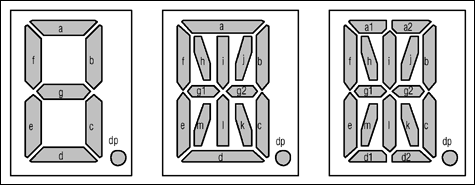
Alphanumeric Display 


Graphic Display


Monochrome Display


Color Display


Computer Display


Unimpact Printer

INKJET PRINTER

 
Inkjet printing is a type of computer printing that creates a digital image by propelling droplets of ink onto paper, plastic, or other substrates. Inkjet printers are the most commonly used type of printer,[1] and range from small inexpensive consumer models to very large professional machines that can cost tens of thousands of dollars, or more.
The concept of inkjet printing originated in the 19th century, and the technology was first extensively developed in the early 1950s. Starting in the late 1970s inkjet printers that could reproduce digital images generated by computers were developed, mainly by Epson, Hewlett-Packard (HP), and Canon. In the worldwide consumer market, four manufacturers account for the majority of inkjet printer sales: Canon, HP, Epson, and Lexmark, a 1991 spin-off from IBM.
The emerging ink jet material deposition market also uses inkjet technologies, typically printheads using piezoelectric crystals, to deposit materials directly on substrates.
There are two main technologies in use in contemporary inkjet printers: continuous (CIJ) and Drop-on-demand (DOD).
Another emerging printing technology is EHD. Liquids can be printed at nanoscale by pyro-EHD. 

THERMAL PRINTER


Thermal printing (or direct thermal printing) is a digital printing process which produces a printed image by selectively heating coated thermochromic paper, or thermal paper as it is commonly known, when the paper passes over the thermal print head. The coating turns black in the areas where it is heated, producing an image. Two-colour direct thermal printers can print both black and an additional colour (often red) by applying heat at two different temperatures.
Thermal transfer printing is a very different method that uses a heat-sensitive ribbon instead of heat-sensitive paper, but uses similar thermal print heads.
Thermal printing is notable for being the only form of (non-embossing) printing which involves no ink or toner.

ELECTROSTATIC PRINTER

Xerography (or electrophotography) is a dry photocopying technique invented by Chester Carlson in 1938, for which he was awarded U.S. Patent 2,297,691 on October 6, 1942. Carlson originally called his invention electrophotography. It was later renamed xerography—from the Greek roots ξηρός xeros, "dry" and -γραφία -graphia, "writing"—to emphasize that, unlike reproduction techniques then in use such as cyanotype, this process used no liquid chemicals.
Carlson's innovation combined electrostatic printing with photography, unlike the dry electrostatic printing process invented by Georg Christoph Lichtenberg in 1778. Carlson's original process was cumbersome, requiring several manual processing steps with flat plates. It was almost 18 years before a fully automated process was developed, the key breakthrough being use of a cylindrical drum coated with selenium instead of a flat plate. This resulted in the first commercial automatic copier, the Xerox 914, being released by Haloid/Xerox in 1960. Before that year, Carlson had proposed his idea to more than a dozen companies, but none were interested. Xerography is now used in most photocopying machines and in laser and LED printers.

THERMAL TRANSFER PRINTER 

Thermal transfer printing is a digital printing process in which material is applied to paper (or some other material) by melting a coating of ribbon so that it stays glued to the material on which the print is applied. It contrasts with direct thermal printing where no ribbon is present in the process. It was invented by SATO corporation around the late 1940s.


LASER PRINTER
 
Laser printing is an electrostatic digital printing process that rapidly produces high quality text and graphics by passing a laser beam over a charged drum to define a differentially charged image. The drum then selectively collects charged toner and transfers the image to paper, which is then heated to permanently fix the image. As with digital photocopiers and multifunction printers (MFPs), laser printers employ a xerographic printing process, but differ from analog photocopiers in that the image is produced by the direct scanning of the medium across the printer's photoreceptor. Hence, it proves to be a much faster process compared to the latter.

Impact Printer

 DOT MATRIX PRINTER


Dot matrix printing or impact matrix printing is a type of computer printing which uses a print head that runs back and forth, or in an up and down motion, on the page and prints by impact, striking an ink-soaked cloth ribbon against the paper, much like the print mechanism on a typewriter. However, unlike a typewriter or daisy wheel printer, letters are drawn out of a dot matrix, and thus, varied fonts and arbitrary graphics can be produced.

Pseudo-color

Several manufacturers implemented color dot-matrix impact printing through a multi-color ribbon. Color was achieved through a multi-pass composite printing process. During each pass, the print head struck a different section of the ribbon (one primary color). For a 4-color ribbon, each printed line of output required a total of 4 passes. In some color printers, such as the Apple ImageWriter II, the printer moved the ribbon relative to the fixed print head assembly. In other models, the print head was tilted against a stationary ribbon.

DAISY WHEEL PRINTER


Daisy wheel printing is an impact printing technology invented in 1969 by David S. Lee at Diablo Data Systems. It uses interchangeable pre-formed type elements, each with typically 96 glyphs, to generate high-quality output comparable to premium typewriters such as the IBM Selectric, but two to three times faster. Daisy wheel printing was used in electronic typewriters, word processors and computers from 1972. The daisy wheel is considered to be so named because of its resemblance to the daisy flower.
By 1980 daisy wheel printers had become the dominant technology for high-quality print. Dot-matrix impact or thermal printers were used where higher speed was required and poor print quality was acceptable. Both technologies were rapidly superseded for most purposes when dot-based printers—in particular laser printers—that could print any characters or graphics rather than being restricted to a limited character set became able to produce output of comparable quality. Daisy wheel technology is now found only in some electronic typewriters.
Thimble printers are closely related to daisy wheel printers, but instead of a flat wheel the petals were bent to form a cup-shaped "thimble" print element. Introduced by NEC in 1977 as their "Spinwriter" series, the replaceable thimbles each held 128 characters.


THIMBLE PRINTER

 A printer that uses a typing element known as thimble, which contains a full set of alphanumeric characters that are pressed through an ink ribbon onto the paper. A thimble printer acts much like many typewriters do. These printers were popular before inkjet and laser computer printers became popular; however, they are no longer used by computer users today.


CHAIN PRINTER


Chain printers (also known as train printers) placed the type on moving bars (a horizontally-moving chain). As with the drum printer, as the correct character passed by each column, a hammer was fired from behind the paper. Compared to drum printers, chain printers had the advantage that the type chain could usually be changed by the operator. A further advantage was that vertical registration of characters in a line was much improved over drum printers, which needed extremely precise hammer timing to achieve a reasonably straight line of print. By selecting chains that had a smaller character set (for example, just numbers and a few punctuation marks), the printer could print much faster than if the chain contained the entire upper- and lower-case alphabet, numbers, and all special symbols. This was because, with many more instances of the numbers appearing in the chain, the time spent waiting for the correct character to "pass by" was greatly reduced. Common letters and symbols would appear more often on the chain, according to the frequency analysis of the likely input. It was also possible to play primitive tunes on these printers by timing the nonsense of the printout to the sequence on the chain, a rather primitive piano. IBM was probably the best-known chain printer manufacturer and the IBM 1403 is probably the most famous example of a chain printer


BAND PRINTER

 
Band printers are a variation of chain printers, where a thin steel band is used instead of a chain, with the characters embossed on the band. Again, a selection of different bands were generally available with a different mix of characters so a character set best matched to the characters commonly printed could be chosen. Dataproducts was a well known manufacturer of band printers, with their B300, B600, and B1000 range, the model number representing the lines per minute rate of the printer. (The B300 was effectively a B600 with only half the number of hammers—one per two character positions. The hammer bank moved back and forth one character position, requiring two goes to print all characters on each line.)

DRUM PRINTER


In a typical drum printer design, a fixed font character set is engraved onto the periphery of a number of print wheels, the number matching the number of columns (letters in a line) the printer could print. The wheels, joined to form a large drum (cylinder), spin at high speed and paper and an inked ribbon is stepped (moved) past the print position. As the desired character for each column passes the print position, a hammer strikes the paper from the rear and presses the paper against the ribbon and the drum, causing the desired character to be recorded on the continuous paper. Because the drum carrying the letterforms (characters) remains in constant motion, the strike-and-retreat action of the hammers had to be very fast. Typically, they were driven by voice coils mounted on the moving part of the hammer.